
Introduction to Department of Pharmaceutical Chemistry including Analysis
The Department of Pharmaceutical Chemistry including Analysis at KM College of Pharmacy focuses on drug design, synthesis, and evaluation. It also emphasizes analytical techniques to identify, quantify, and ensure the quality, purity, and safety of pharmaceutical products, preparing students for research and industry roles.
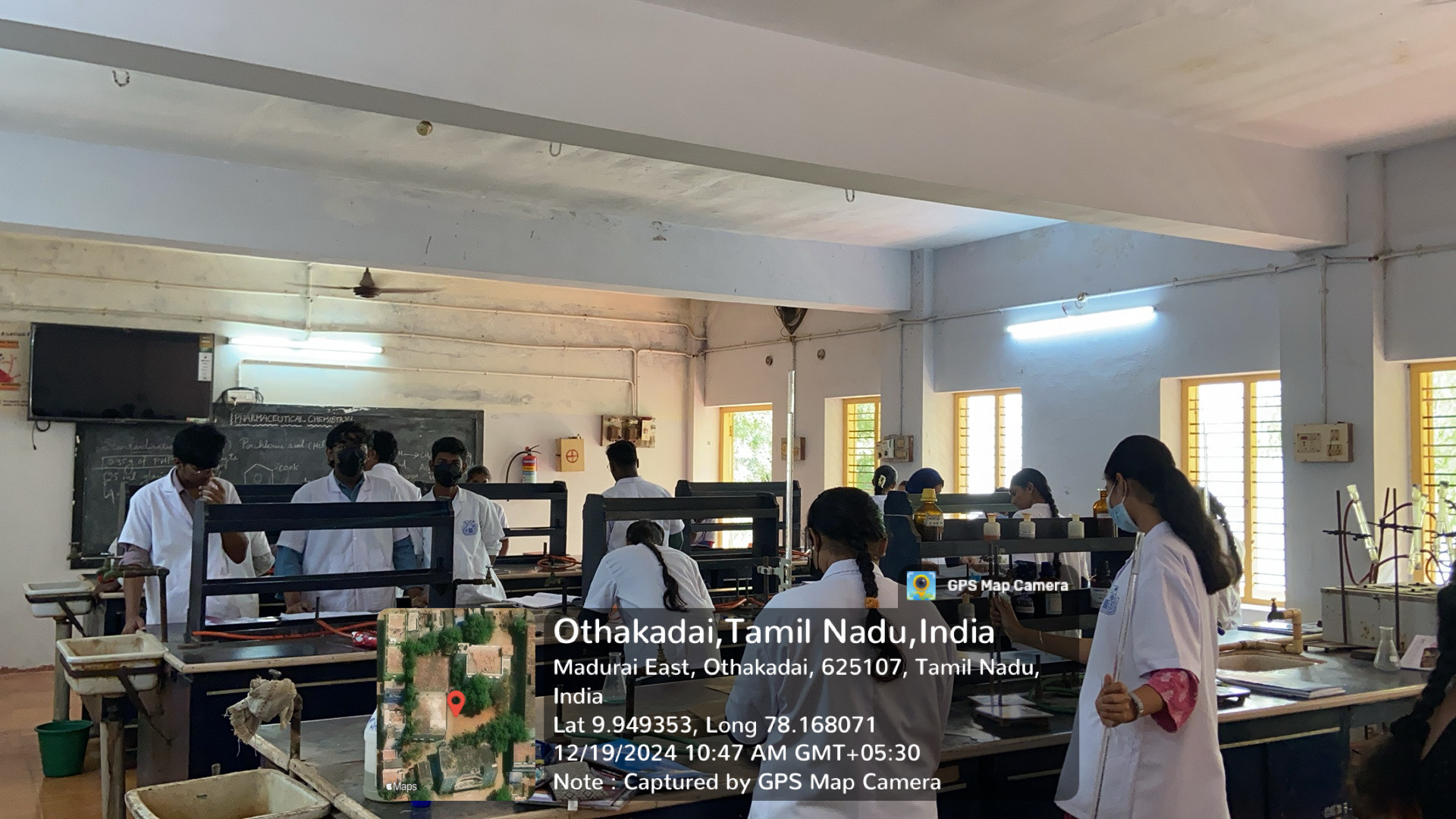
About The Program
The Department of Pharmaceutical Chemistry including Analysis at KM College of Pharmacy is a multidisciplinary field that combines chemistry, biology, and pharmacology to study drugs and their development. It focuses on the design, synthesis, and evaluation of pharmaceutical compounds, as well as the analysis of their quality, purity, and effectiveness.
Pharmaceutical chemistry deals with understanding the structure and activity of drug molecules, while pharmaceutical analysis involves identifying, quantifying, and ensuring the safety of pharmaceutical products using modern analytical techniques.
The department also provides practical training through well-equipped laboratories, enabling students to gain skills in drug discovery, synthesis, and quality control, preparing them for careers in research and the pharmaceutical industry.
Research Areas
Research in the Department of Pharmaceutical Chemistry and Analysis has shifted from traditional "trial and error" synthesis toward precision discovery and real-time quality monitoring.
Drug Discovery & Design (The "Discovery" Pillar)
This area focuses on finding new chemical entities (NCEs) to treat diseases. In 2026, the focus is heavily on computer-guided precision.
Computer-Aided Drug Design (CADD): Using Artificial Intelligence (AI) and Machine Learning (ML) to perform "virtual screening" of millions of molecules before they are ever made in a lab.
Targeted Protein Degraders: Developing "smart" molecules (like PROTACs) that don't just block a disease-causing protein but tag it for the body to destroy entirely.
Novel Small Molecules: Synthesizing new compounds for "untreatable" areas, particularly Antibiotic Resistance, Neurodegenerative diseases (Alzheimer's/Parkinson's), and Rare Cancers.
Sustainable & Synthetic Chemistry (The "Optimization" Pillar)
Modern departments are researching how to make drugs more efficiently and with less environmental impact.
Green Chemistry: Developing "one-pot" reactions and using water or biodegradable solvents instead of toxic organic chemicals to synthesize medicines.
Electrochemical Synthesis: A 2026 trend using electricity as a "clean reagent" to drive chemical reactions, reducing the need for expensive and hazardous metal catalysts.
Peptide & Biologic Synthesis: Moving beyond simple pills to research complex chains of amino acids (peptides) that can act as highly specific drugs with fewer side effects.
Advanced Pharmaceutical Analysis (The "Verification" Pillar)
This wing ensures the safety and consistency of modern, complex medicines.
Impurity Profiling: Researching "Genotoxic Impurities"—tiny traces of chemicals that might be carcinogens—to ensure absolute drug safety.
Process Analytical Technology (PAT): Researching ways to use sensors (like Raman or NIR spectroscopy) to monitor drug quality inside the manufacturing machines in real-time, rather than testing samples in a separate lab later.
Bio-Analytical Method Development: Creating ultra-sensitive tests to measure how much of a drug is in a patient's breath, sweat, or a single drop of blood.
Emerging "Frontier" Research
Many leading colleges have recently added these interdisciplinary areas:
Phytochemistry 2.0: Using modern analysis to "standardize" herbal medicines—essentially proving exactly which molecule in a plant heals the body and ensuring every batch is identical.
Digital Therapeutics & Sensors: Researching drug-device combinations, such as "smart pills" that signal a phone app once they have been digested
The research areas are generally categorized into three main pillars: Discovery, Optimization, and Verification
Facilities & Infrastructure
The facilities in a Department of Pharmaceutical Chemistry and Analysis are designed to simulate an industrial R&D environment. They provide the transition from basic chemical synthesis to high-precision drug testing.
Synthetic Chemistry Laboratories
These labs are where "new molecules" are born. They are designed for safety and complex chemical reactions.
Synthesis Benches: Equipped with specialized Fume Hoods (with vacuum, nitrogen, and water lines) to safely handle volatile or toxic chemicals.
Reaction Equipment: Includes Microwave Synthesizers for rapid drug discovery and Parallel Synthesizers for making multiple drug variations at once.
Rotary Evaporators: Used for the fast removal of solvents under reduced pressure.
Safety Features: Critical infrastructure like Emergency Eye Washes, Safety Showers, and specialized chemical storage cabinets for flammables and acids.
Central Instrumentation Facility (CIF)
This is the "brain" of the department, usually kept in a climate-controlled (air-conditioned) and dust-free environment.
High-Performance Liquid Chromatography (HPLC): The industry standard for determining drug purity and concentration.
UV-Visible Spectrophotometers: For basic quantitative analysis of drug substances.
FT-IR (Fourier Transform Infrared) Spectroscopy: Used to "fingerprint" molecules and identify functional groups.
Computational Chemistry & Design Lab
Before going to the "wet lab," students use this digital facility to predict how a drug will behave.
Workstations: High-speed computers capable of running complex molecular simulations.
Software Tools: Licenses for industry-standard software like Schrödinger, AutoDock, or ChemDraw.
Virtual Reality (VR) Hubs: (An emerging 2026 trend) Used for "walking through" a protein receptor to visualize how a drug molecule docks into it.
Publications
List of recent publications by our faculty and research scholars.
Presentations
Scientific presentations at various national and international conferences.