
Introduction to Department of Pharmacognosy
The Department of Pharmacognosy at K.M. College of Pharmacy, Madurai, is where modern science meets ancient healing. Pharmacognosy is the study of medicines derived from natural sources—including plants, animals, and marine organisms.
In a country like India, which has a rich heritage of Ayurveda and Siddha, this department plays a crucial role in scientifically validating traditional knowledge using modern analytical techniques.
About The Program
The department focuses on the "crude drug" cycle: from the cultivation of medicinal plants to the extraction of pure active compounds. It ensures that herbal products are safe, standardized, and free from adulteration.
Key areas of study include:
Morphology & Histology: Examining the physical and microscopic features of plants to identify them correctly.
Phytochemistry: The chemical study of plant-derived compounds (alkaloids, glycosides, flavonoids).
Cultivation & Collection: Learning the best climate and soil conditions for growing medicinal crops.
Plant Tissue Culture: Growing plant cells in a lab setting to produce medicinal compounds without needing a whole farm.
Research Areas
Research in a Department of Pharmacognosy is fundamentally about the scientific bridge between nature and medicine. In 2026, the field has evolved from simple plant identification to high-tech molecular discovery and global quality standardization.
Here are the key research areas typically pursued in this department:
Phytochemical Investigation & Isolation
This is the "detective work" of the department. Researchers take raw plant material and break it down to find the specific molecule responsible for a healing effect.
Extraction Technology: Using modern methods like Supercritical Fluid Extraction (SFE) or Microwave-Assisted Extraction (MAE) to get higher yields of active compounds.
Isolation of Markers: Purifying specific chemicals (alkaloids, flavonoids, glycosides) using Column Chromatography and Preparative HPLC.
Structure Elucidation: Identifying the exact chemical structure of a new compound using UV, IR, NMR, and Mass Spectrometry.
Standardization of Herbal Formulations
Since natural products vary based on soil, weather, and season, standardization is critical to ensure every pill is the same.
Fingerprinting: Using HPTLC (High-Performance Thin Layer Chromatography) to create a unique chemical "barcode" for a plant.
Adulteration Detection: Developing microscopic and chemical tests to identify fake or lower-quality herbs mixed into commercial products.
Quality Control (QC): Testing for heavy metals, pesticide residues, and microbial contamination in herbal raw materials.
Ethnobotany & Ethnopharmacology
This area focuses on documenting and validating traditional knowledge (Siddha, Ayurveda, Unani).
Field Surveys: Interviewing traditional healers to document medicinal uses of local flora.
Scientific Validation: Testing traditional claims (e.g., "this leaf heals wounds") using pharmacological models to see if the science matches the legend.
Marine Pharmacognosy
One of he most exciting frontiers in 2026, exploring the vast, untapped medicinal potential of the oceans.
Bioactive Compounds: Searching for anticancer, antiviral, and antibiotic agents from marine sponges, algae, fungi, and bacteria.
Marine Toxins: Studying potent venoms (like from cone snails) to develop high-potency painkillers.
Plant Tissue Culture (Biotechnology)
This area removes the need for large farms by growing medicinal compounds in a laboratory.
Callus & Suspension Culture: Growing plant cells in nutrient-rich broths to produce secondary metabolites.
Genetic Transformation: Modifying plant DNA to "force" the plant to produce more of a specific medicinal compound (e.g., increasing the yield of Taxol for cancer treatment).
Nutraceuticals & Cosmeceuticals
Researching natural products that sit between "food" and "medicine" or "cosmetics" and "medicine."
Functional Foods: Researching antioxidants from fruits and vegetables that prevent chronic diseases.
Herbal Cosmetics: Developing stable, effective skin and hair care products using natural extracts like Green Tea, Curcumin, or Aloe Vera.
Facilities & Infrastructure
Laboratory Facilities
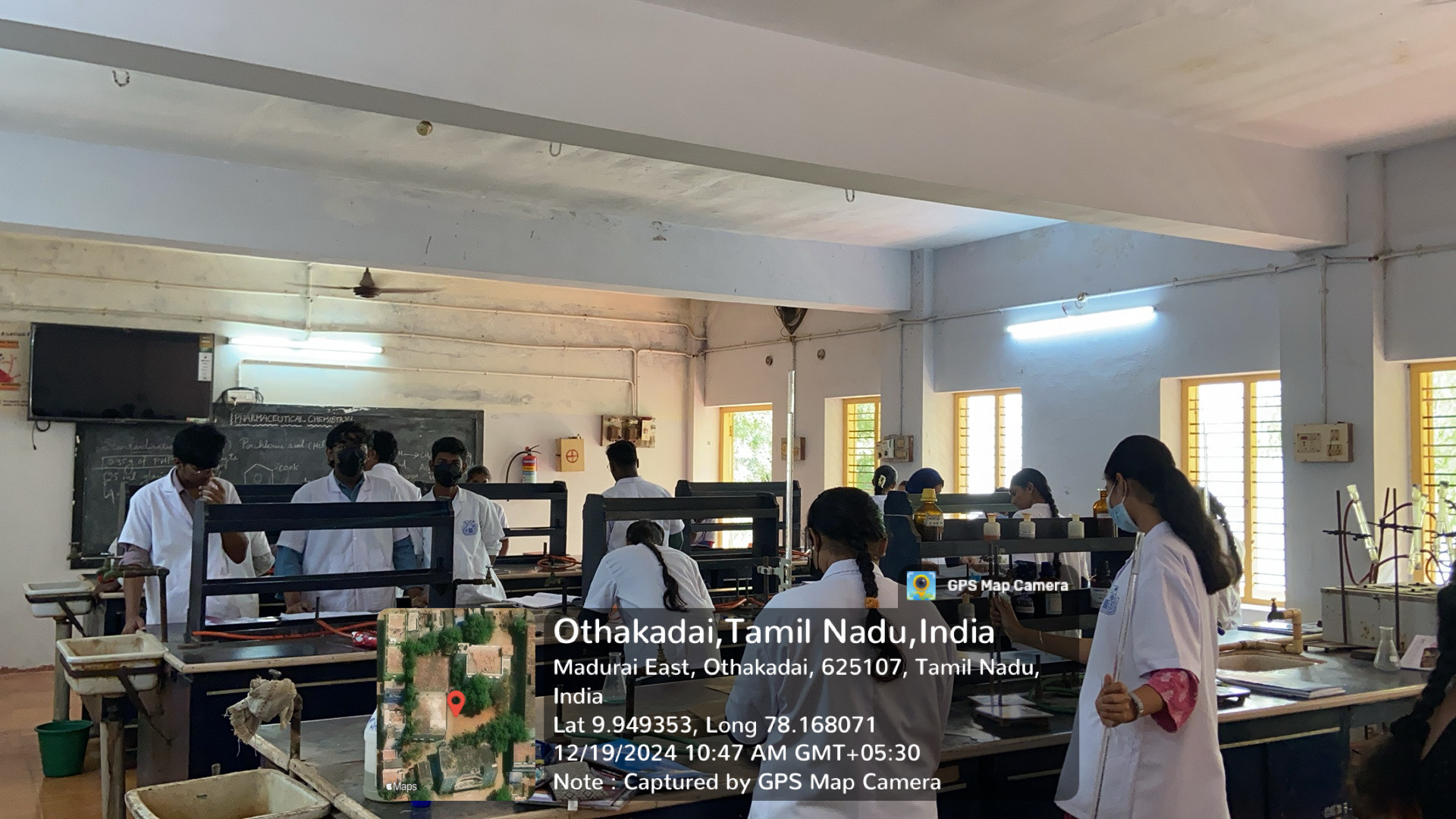
The Pharmacognosy labs are unique because they blend biology with chemistry.
Pharmacognosy Lab I & II: These are equipped for the anatomical study of plants. Students use microscopes to identify cellular structures like trichomes, stomata, and calcium oxalate crystals.
Phytochemistry Lab: A specialized zone for the extraction, isolation, and purification of active constituents from natural sources.
Medicinal Garden: A living laboratory. KMCP maintains a garden with a variety of medicinal species, allowing students to study plants in their natural habitat rather than just in dried forms.
Herbarium: A collection of preserved plant specimens used as a reference for authenticating new samples.
Publications
List of recent publications by our faculty and research scholars.
Presentations
Scientific presentations at various national and international conferences.